

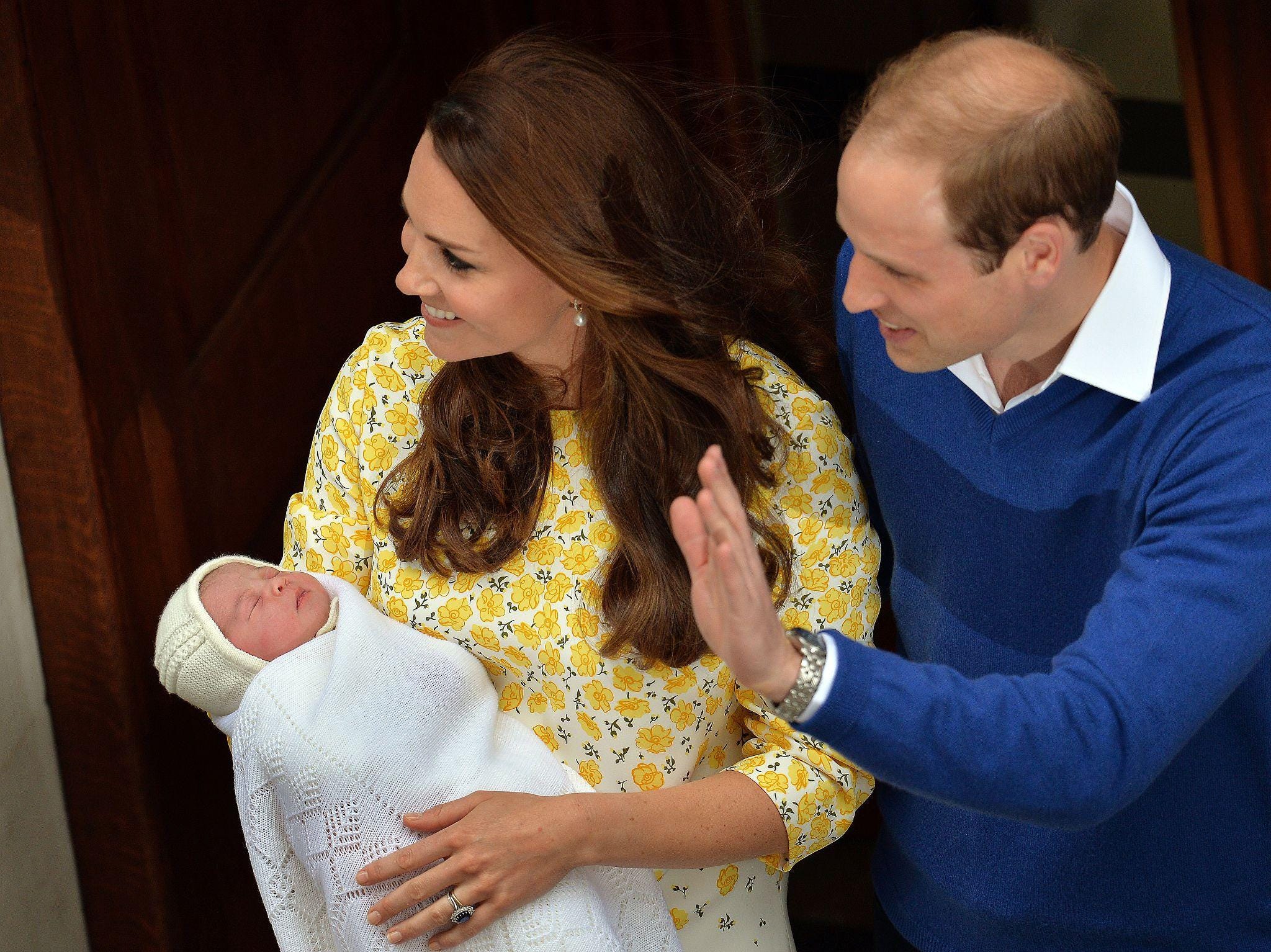
One of the most persistent misconceptions about the modern royal succession is the claim that Elizabeth II changed the rules so that Princess Charlotte could be a princess from birth.
At first glance, the argument appears convincing. Charlotte was born in 2015 as HRH Princess Charlotte of Cambridge, and many people know that changes to both the succession laws and royal titles took place shortly before her birth. The conclusion often drawn is that the changes were made specifically for her.
The reality is rather different.
Charlotte undoubtedly benefited from the reforms, but she was not their reason. In fact, when the crucial decisions were taken, Charlotte did not yet exist and nobody knew whether the Duke and Duchess of Cambridge’s first child would be a boy or a girl.
To understand what happened, it is important to separate two distinct constitutional developments: the Succession to the Crown Act 2013 and Elizabeth II’s Letters Patent of 2012.
Two Different Changes
Although they are frequently discussed together, the two measures address entirely different issues.
The Succession to the Crown Act 2013 dealt with who could inherit the Crown.
The Act ended the centuries-old system of male-preference primogeniture for future generations of the Royal Family. Previously, a younger son would take precedence over an elder daughter in the line of succession. Under the new rules, the eldest child would inherit regardless of sex.
The Act also removed the disqualification arising from marriage to a Roman Catholic and replaced the sweeping provisions of the Royal Marriages Act 1772 with a more limited requirement that only the first six people in line to the throne must obtain the Sovereign’s consent to marry.
The 2012 Letters Patent, by contrast, had nothing to do with succession. They dealt with royal styles and titles.
Under rules established by George V in 1917, the title of Prince or Princess and the style of Royal Highness were not automatically available to all great-grandchildren of the Sovereign. The rules limited these dignities to specific categories of royal descendants.
Most importantly for the present discussion, the 1917 Letters Patent provided that only “the eldest living son of the eldest son of the Prince of Wales” would automatically be a Prince and Royal Highness.
In practical terms, this meant that William’s eldest son would be born a prince. Any daughters, however, would not automatically receive that status.
As long as succession favoured males, this distinction caused little difficulty. Once plans were underway to introduce absolute primogeniture, however, a potential anomaly emerged.
What if William and Catherine’s first child were a girl?
Under the proposed succession reforms, she would be ahead of any younger brother in the line of succession and could one day become Queen. Yet under the existing title rules, she would not automatically be born a princess.
It was this inconsistency that the Queen sought to address.
The Road to Reform
The story begins shortly after the wedding of Prince William and Catherine Middleton on 29 April 2011.
At the time, William was second in line to the throne after his father, the then Prince of Wales. Any future children of the marriage would therefore be close to the line of succession and, in due course, potential heirs to the Crown.
Only a few months later, leaders from across the Commonwealth realms gathered in Perth, Australia, for the Commonwealth Heads of Government Meeting.
On 28 October 2011, the prime ministers of the sixteen realms that shared Elizabeth II as Sovereign reached what became known as the Perth Agreement.
The agreement recognised that the existing succession rules no longer reflected modern values. The participating governments agreed that male-preference primogeniture should end and that the remaining restrictions concerning marriage to Roman Catholics should be amended.
The agreement itself did not change the law. Rather, it represented a political commitment by all the realms to enact corresponding legislation or constitutional measures.
This coordination was essential because the Crown is shared among independent sovereign states. Any alteration to the rules of succession required the cooperation of all the realms to avoid the possibility of different countries recognising different monarchs.
As a result, reform proved more complicated than passing a single Act of Parliament at Westminster.
Each realm had to determine how the changes would be implemented within its own constitutional framework. Some required legislation. Others could proceed through different constitutional mechanisms. The process, therefore, took several years.
William and Catherine’s First Child
On 3 December 2012, Buckingham Palace announced that the Duchess of Cambridge was expecting her first child.
At this point, Parliament had not yet completed work on the succession legislation and the sex of the baby was unknown.
It was precisely this uncertainty that made the issue urgent.
If the child were a girl, she would be affected directly by the proposed move to absolute primogeniture. Yet under the existing rules governing royal titles, she would not automatically become a princess.
To ensure that the titles framework aligned with the principles behind the succession reforms, Elizabeth II issued Letters Patent on 31 December 2012.
The document declared that all children of the eldest son of the Prince of Wales would enjoy the style, title and attribute of Royal Highness and the titular dignity of Prince or Princess.
The timing is revealing.
The Letters Patent were issued before the birth of William and Catherine’s first child and before anyone outside a very small circle could possibly know whether that child would be male or female.
The measure was therefore not designed specifically for Charlotte. Rather, it was a precautionary constitutional adjustment intended to ensure that any child born to the couple would receive appropriate status.
The Succession to the Crown Act
Meanwhile, the legislative process continued.
The Succession to the Crown Bill was introduced into Parliament in December 2012 and received Royal Assent on 25 April 2013.
Even then, the reforms did not immediately come into force.
Because the changes required coordination among all the Commonwealth realms, implementation had to await the completion of the necessary constitutional procedures elsewhere. Only once the realms had confirmed that their respective requirements had been met could the reforms take effect.
The Act finally entered into force on 26 March 2015.
By that stage, Prince George had already been born.
Because George was male and the eldest child, the new rules made no practical difference to his position in the line of succession. He would have remained ahead of any younger siblings under either the old or the new system.
The significance of the reform became apparent only when his sister arrived.
The Arrival of Princess Charlotte
Princess Charlotte was born on 2 May 2015.
Thanks to the 2012 Letters Patent, she was HRH Princess Charlotte from birth.
Thanks to the Succession to the Crown Act, she retained her place ahead of her younger brother, Prince Louis, when he was born in 2018.
Charlotte was not the first person anywhere in the line of succession to benefit from the introduction of absolute primogeniture. That distinction belongs to Senna Lewis, granddaughter of the Duke of Gloucester, whose position moved ahead of that of her younger brother when the Act came into force in 2015.
Charlotte was, however, the first princess born into the immediate Royal Family whose place in the succession was protected by the new rules and who could not be displaced by a younger brother.
Yet it would be wrong to conclude that either reform was created specifically for her.
The succession changes were agreed internationally in 2011, years before her birth, as part of a wider effort to modernise the constitutional rules governing the Crown.
The Queen’s Letters Patent of 2012 were issued because William and Catherine were expecting a child whose sex was unknown. The purpose was to ensure that the title rules would sit comfortably alongside the proposed succession reforms, regardless of whether that child proved to be a boy or a girl.
Charlotte was the beneficiary of those changes, not their inspiration.
Princess Charlotte has become the public face of the succession reforms, and understandably so. Every time the line of succession is published, her position ahead of her younger brother serves as a visible reminder that male-preference primogeniture has passed into history. Yet the reforms themselves were broader, older and more complex than is often remembered. They emerged from an agreement between sixteen Commonwealth realms, required years of constitutional coordination, and were designed to modernise both succession law and royal titles before the birth of William and Catherine's first child. Charlotte became their most famous beneficiary, but she was never their sole purpose.
In short, the reforms were not about creating a princess. They were about modernising the monarchy for the twenty-first century and ensuring that the position of a future monarch’s eldest child would no longer depend upon whether that child happened to be male or female.