

It is one of the most persistent—and curiously revealing—misnomers in the English-speaking world: the habit of referring to the present sovereign as the “King of England”. One hears it in films, in journalism, and with particular frequency across the Atlantic. It is, of course, wrong. But more than that, it is interestingly wrong.
For the simple truth is that, at almost no point in history since the early eighteenth century has there been a “King of England”. And even before that date, the crowns worn by English monarchs concealed a far more intricate constitutional reality than the shorthand suggests.
To understand what the British monarch is monarch of, one must begin not with empire, nor even with Great Britain, but with a gradual, uneven process of consolidation—of which Wales provides the first and most instructive example.
The Disappearance of Wales
When William I took the English throne in 1066, he was, in formal terms, King of England. Wales lay beyond his direct control: a patchwork of native principalities and marcher lordships, loosely dominated but not absorbed.
The process of bringing Wales under the English crown was long and, at times, brutal. It culminated under Edward I in the late thirteenth century, whose campaigns effectively extinguished independent Welsh rule. Yet even then, Wales was not simply “England”.
The decisive change came under Henry VIII. The Laws in Wales Acts 1535 and 1542 abolished Wales as a separate legal entity and fully integrated it into the Kingdom of England.
By the time of Elizabeth I, Wales had disappeared—constitutionally speaking—into England itself.
Ireland: From Lordship to Partition
If Wales represents absorption, Ireland represents something far more complex: a relationship that evolves, over centuries, from lordship to kingdom, from union to division.
English involvement begins in earnest under Henry II, who asserted authority as Lord of Ireland. For centuries thereafter, Ireland remained a lordship of the English crown—never fully subdued, and never fully integrated.
A significant shift came under Henry VIII, who in 1542 had himself declared King of Ireland, elevating the territory from lordship to kingdom. This placed Ireland, at least formally, on the same monarchical footing as England, even if the reality remained more complicated.
When James VI and I came to the throne in 1603, he was simultaneously:
King of England (including Wales)
King of Scotland
King of Ireland
Three crowns, one head.
The next transformation came with the Acts of Union 1800, which created the United Kingdom of Great Britain and Ireland in 1801. Ireland was no longer a separate kingdom in personal union, but part of a single, unified state.
That arrangement did not endure. Following the upheavals of the early twentieth century, most of Ireland left the United Kingdom in 1922, under the terms of the Anglo-Irish Treaty:
Southern Ireland became self-governing (and later a republic)
Northern Ireland remained within the United Kingdom
Thus the monarch’s relationship with Ireland—once lord, then king, then sovereign of a united kingdom—was fundamentally redefined.
Three Kingdoms, One Monarch
The accession of James VI and I in 1603 illustrates something subtler: unity of person without unity of state.
When James inherited the English throne from Elizabeth I, he did not create a new kingdom. Instead, he accumulated crowns. He was already King of Scotland; he became King of England (which included Wales) and King of Ireland. What emerged was a composite monarchy—one individual ruling three distinct kingdoms.
This distinction is not pedantic; it is fundamental. Each of James’s kingdoms retained:
Its own Parliament
Its own legal system
Its own church settlement
Even the famous Authorised Version of the Bible (1611) was produced within this context: a shared monarch attempting to impose a degree of religious uniformity across jurisdictions that remained constitutionally separate.
James himself preferred the title “King of Great Britain”, but this was aspirational. No such state existed in law. The crowns were worn together, but not fused.
This arrangement persisted through the seventeenth century, surviving civil war, the execution of Charles I, republican interlude, and restoration. It is a striking example of a monarchy that is already multinational, yet not yet unified—a reminder that political geography and royal title do not always align.
A King of France?
Complicating matters further—if only symbolically—was the English (and later British) claim to the throne of France.
This began under Edward III, who in 1340 asserted a dynastic claim that helped to ignite the Hundred Years’ War. For a time, the claim had real substance. Under Henry V, the Treaty of Troyes recognised him as heir to the French throne, raising the possibility—briefly—of a dual monarchy.
That possibility collapsed within a generation. By 1453, English rule in France had effectively ended. Yet the claim did not.
Instead, it lingered—centuries beyond its practical relevance—in royal style and symbolism. English and later British monarchs continued to call themselves “King of France” and to quarter the fleurs-de-lis in their arms. It became a constitutional fossil: a title detached from reality, preserved by tradition.
Its eventual abandonment in 1801, under George III, was telling. There was no dramatic renunciation, no diplomatic reckoning—merely a quiet adjustment of titles to reflect what had long been true.
The episode serves as a cautionary note for your broader theme: royal titles are not always reliable guides to political fact. Sometimes they describe reality; sometimes they memorialise it; sometimes they simply outlive it.
The End of England
If the French claim shows how titles can outlast reality, the Acts of Union 1707 demonstrate the reverse: how reality can extinguish a title altogether.
Under Anne, the Kingdom of England (already including Wales) and the Kingdom of Scotland were merged into a new state: the Kingdom of Great Britain.
This was not a personal union of crowns, as in 1603, but a full political union:
One Parliament at Westminster
One sovereign state
One crown in law, not merely in person
The consequences are often underappreciated. From 1707 onward, there is no sovereign Kingdom of England. It does not exist—not as a legal entity, not as a political unit, not as a crown.
Thus the phrase “King of England” does not become imprecise at this point; it becomes meaningless.
Empire and Its Transformation
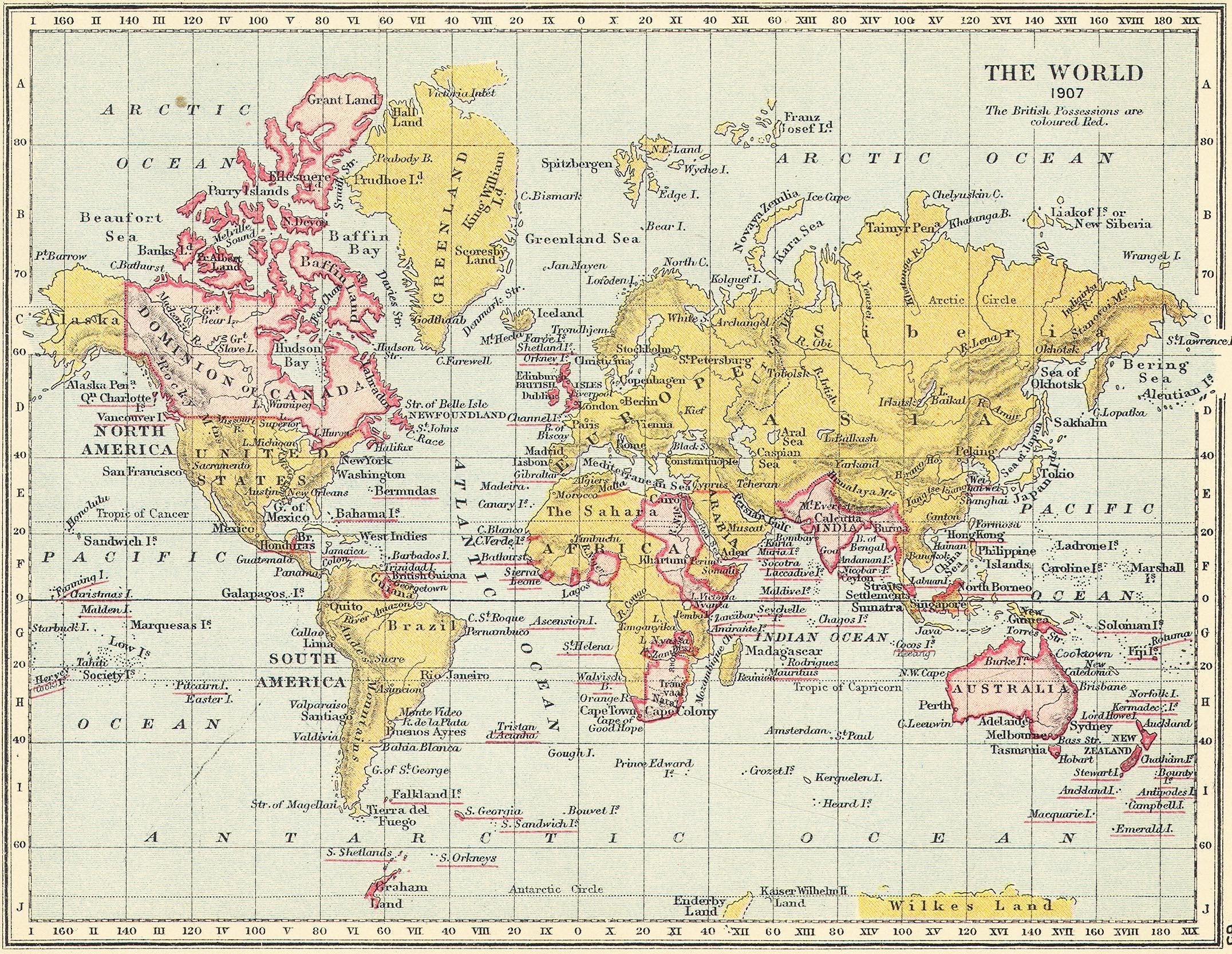
The expansion of British power overseas added scale, but not simplicity.
Under Victoria, the monarchy came to preside over a vast empire. Yet this empire was never a single constitutional entity. It consisted of:
Crown colonies governed directly
Protectorates with indirect rule
Self-governing Dominions with substantial autonomy
Victoria’s title as Empress of India (1876) reflected imperial reach, but not uniform governance. The Crown functioned differently in different places.
The Statute of Westminster 1931 marked the decisive turning point. It recognised that the Dominions were independent states, equal in status to the United Kingdom.
From this moment, the Crown ceased to be a purely British institution extended outward. Instead, it became something more unusual: a shared monarchy, existing separately within multiple sovereign states.
From Empire to Commonwealth
As the Empire receded, it gave way not to a single successor, but to two overlapping—and often confused—concepts.
The first is the Commonwealth of Nations: a voluntary association of independent countries, most of them former parts of the British Empire. Membership does not require a shared head of state, nor even a monarchical system. Republics such as India and South Africa sit comfortably alongside kingdoms.
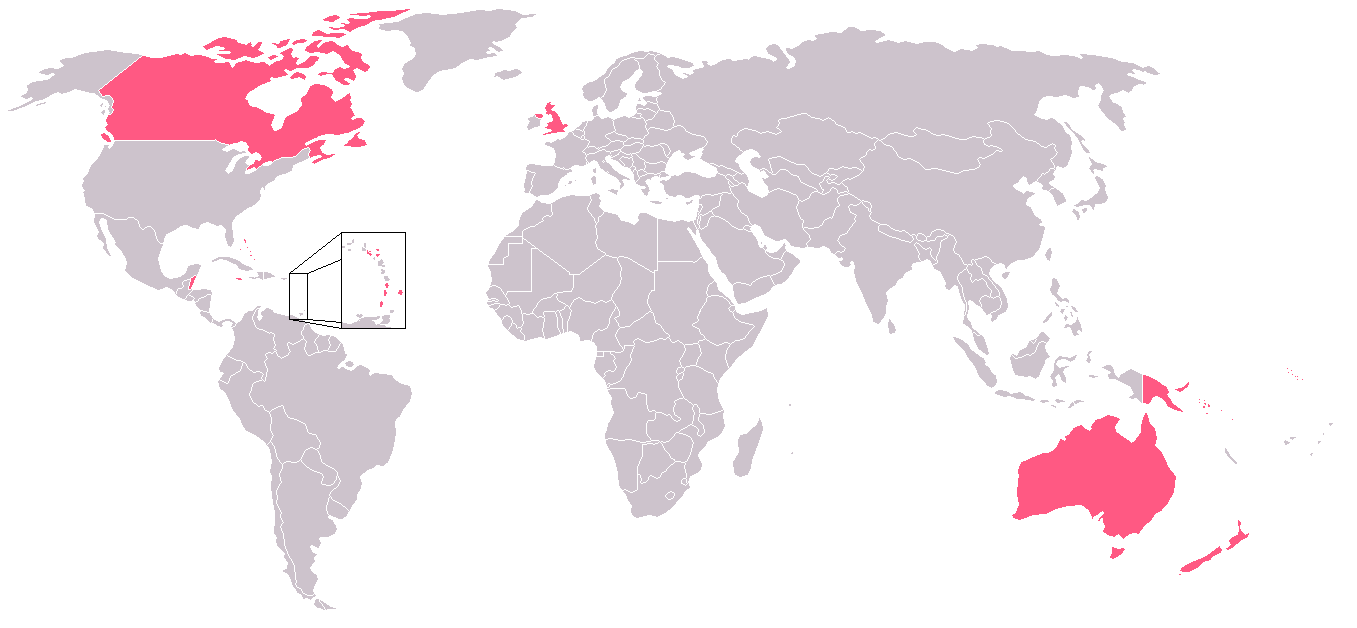
The second is the more specific category of Commonwealth realms: those countries which retain the monarch as their own head of state. These include, among others, the United Kingdom, Canada, Australia, and New Zealand.
The distinction is crucial:
The Commonwealth of Nations is a diplomatic and cultural association
The Commonwealth realms are constitutional monarchies sharing the same sovereign
One may belong to the first without the second. Most members, in fact, do.
Complicating matters slightly further is the role of Head of the Commonwealth. This is not a hereditary title, nor is it constitutionally tied to monarchy. Nevertheless, since the mid-twentieth century, it has been held successively by George VI, Elizabeth II, and now Charles III.
In 2018, Commonwealth leaders agreed that Charles should succeed Elizabeth in this role—an important reminder that, unlike the Crown, it rests on collective consent rather than inheritance.
The Many Crowns of Elizabeth II
When Elizabeth II acceded in 1952, she inherited not a static inheritance, but a system in motion.
As decolonisation proceeded, newly independent states faced a choice: retain the Crown or become republics. Many chose the latter. Some, however, retained the monarch—creating a network of independent realms sharing a sovereign.
At its height, Elizabeth II was head of state of more than thirty countries. By the end of her reign, that number had reduced to fifteen.
The key point is constitutional rather than numerical. She did not rule a single transnational entity. Instead, she occupied multiple, legally distinct thrones simultaneously. In each realm, her authority derived from that country’s own constitution, not from the United Kingdom.
A Changing Monarchy: From Elizabeth II to Charles III
This arrangement is not fixed. It continues to evolve.
In 2021, Barbados became a republic, removing the monarch as head of state while remaining within the Commonwealth of Nations. The transition was orderly and deliberate—less a rupture than a constitutional adjustment.
Other realms have considered similar steps. Some have held referendums; others have ongoing debates. There is no requirement of uniformity. Each country determines its own constitutional future.
Thus, when Charles III acceded in 2022, he became monarch not of a fixed set of countries, but of a potentially changing group of realms, each free to reconsider its position.
A King of Many Places—and None of Them “England”
Today, Charles III is separately:
King of the United Kingdom
King of Canada
King of Australia
King of New Zealand
and of several other independent realms
Each title rests on a distinct constitutional foundation. Each exists independently of the others.
What he is not—and what no monarch has been for more than three centuries—is “King of England”.
The Point of the Matter
To call the present sovereign “King of England” is not merely imprecise. It is to flatten a rich and complex history into a convenient fiction.
The monarchy has encompassed:
Absorption (Wales)
Personal union (the Stuarts)
Political union (Great Britain and later the United Kingdom)
Dynastic ambition (France)
Imperial expansion and retreat
And, finally, a network of independent realms linked by a shared Crown
It has been, at different times, many things—but rarely simple.
The habit of saying “King of England” persists because it feels intuitive: England is the largest and historically dominant part of the United Kingdom. Yet intuition, in this case, obscures reality. The crown has never sat neatly within those borders, and for more than three centuries it has not been tied to them at all.
To speak accurately is not to be pedantic; it is to recognise how the monarchy has evolved—through conquest, union, separation, and reinvention—into something rather unusual: a single institution that exists simultaneously in multiple constitutional forms.
And so the question remains a useful one, precisely because it resists an easy answer:
Monarch of where?