

How the union of England and Scotland created a royal numbering problem — and why it took a row over postboxes to explain the solution.
When Prince William eventually succeeds his father, he will probably become King William V.
That seems straightforward enough. Britain has already had four kings called William, so the next one will be the fifth.
But suppose a future monarch decides to reign as James. He would probably become James VIII, despite the fact that the United Kingdom has never had a James III, IV, V, VI or VII.
And if we ever have another King Alexander, he would probably be Alexander IV. There has never been a King Alexander of England, Great Britain or the United Kingdom.
What’s going on?
The answer takes us back several centuries, involves the complicated relationship between England and Scotland, and eventually leads to an unexpectedly heated argument about postboxes.
Two kingdoms, two histories
In 1603, Elizabeth I died without children. The English throne passed to her cousin, James VI of Scotland.
James had already been King of Scotland for 36 years. He was the sixth Scottish king of that name, following a succession of Jameses stretching back to the fifteenth century.
But England had never had a King James.
So James VI of Scotland became James I of England.
He was the same man, ruling two separate kingdoms, with two different regnal numbers.
This arrangement is known as the Union of the Crowns. It wasn’t a political union. England and Scotland retained their own parliaments, legal systems and institutions. They simply shared a monarch.
The numbering differences continued.
When William of Orange became king in 1689, he was William III in England but William II in Scotland. He is sometimes referred to as William III and II.
The situation changed in 1707, when the Acts of Union brought England and Scotland together into the new Kingdom of Great Britain.
There was now one kingdom, with one monarch. And, therefore, one regnal number.
But there was still a problem: which kingdom’s numbering system should be used?
The problem that didn’t go away
For a surprisingly long time, the issue attracted relatively little attention.
The first monarch of Great Britain was Queen Anne, who had already been Queen of England, Scotland and Ireland since 1702. Neither England nor Scotland had previously had a reigning Queen Anne.
Then came the Hanoverians: George I, George II, George III and George IV. Neither England nor Scotland had previously had a King George.
When William IV succeeded George IV in 1830, however, the discrepancy returned.
England had previously had three King Williams. Scotland had had only two.
The new monarch used William IV, following the English sequence.
The same thing happened when Edward VII came to the throne in 1901. England had previously had six kings called Edward. Scotland had never had a king of that name in its recognised royal succession.
Edward VII nevertheless used the English numbering.
And his grandson, Edward VIII, followed the same convention in 1936.
So there was an established practice of using the higher number. But all the examples favoured England.
That distinction would become important.
Elizabeth I or Elizabeth II?
On 6 February 1952, George VI died and his daughter Elizabeth became Queen.
In England, the numbering was obvious. Elizabeth I had reigned from 1558 to 1603. The new Queen was therefore Elizabeth II.
But Scotland had never had an Elizabeth I.
For some Scots, calling the new monarch Elizabeth II seemed to imply that the English royal succession took precedence over the Scottish one.
This wasn’t simply a theoretical disagreement among constitutional historians.
It became a very public controversy.
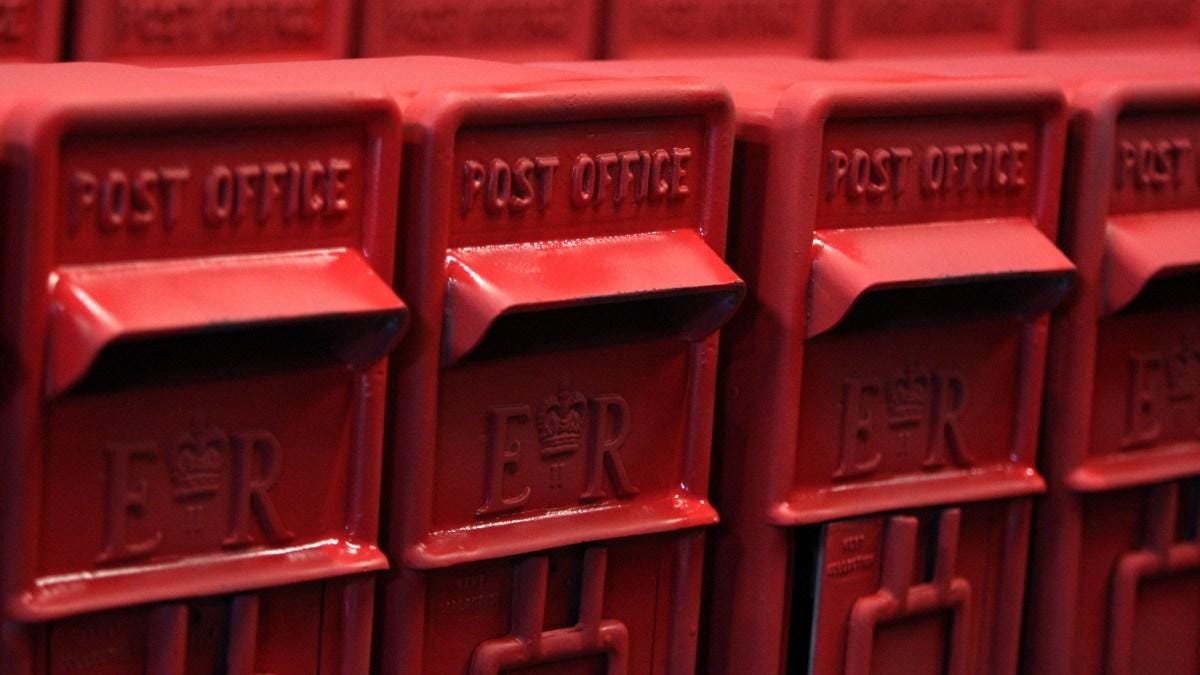
The most visible battleground was the humble postbox.
The postbox war
British postboxes traditionally display the royal cypher of the monarch during whose reign they were installed.
Under Elizabeth II, that cypher was EIIR: Elizabeth II Regina.
But in Scotland, the appearance of EIIR on new postboxes provoked protests.
Some boxes were vandalised. One particularly controversial box in Edinburgh, installed in November 1952, was repeatedly attacked and eventually destroyed by an explosion in February 1953.
The disagreement had escalated from a debate about constitutional history to actual violence.
There was also a legal challenge.
In MacCormick v Lord Advocate, John MacCormick and Ian Hamilton argued that the use of Elizabeth II was inconsistent with the Treaty of Union of 1707.
The Scottish courts rejected their challenge in July 1953. The judges did not establish a new rule for numbering monarchs; they concluded that the legal challenge could not succeed.
The practical solution to the postbox controversy was rather simpler.
New Scottish postboxes would display the Crown of Scotland instead of the EIIR cypher.
That distinction remains visible today. Compare an Elizabeth II postbox in England with one installed during her reign in Scotland, and you’ll generally see different royal symbols.
A constitutional argument has left a permanent mark on the street furniture.
Churchill explains the rules
While all this was happening, the question reached Parliament.
On 15 April 1953, Lieutenant-Colonel Walter Elliot asked Prime Minister Winston Churchill whether the decision to use Elizabeth II had taken account of the principle that the higher of the English and Scottish regnal numbers should be used.
Churchill confirmed that this was the practice followed since the Union.
He also suggested that it would be sensible to continue using the higher number in future, whichever kingdom supplied it.
That last part is important.
It meant that the convention wasn’t supposed to favour England. If Scotland had had more monarchs with a particular name, the Scottish number should take precedence.
Churchill even offered James and Robert as examples of names for which the Scottish sequence might supply the number.
And that gives us some interesting possibilities.
Meet the kings who haven’t existed yet
Let’s imagine four future monarchs, each choosing a traditional royal name.
William V
England had William I, William II, William III and William IV. Scotland had William I, William II and William III (the last of whom was the same monarch as England’s William IV).
The next William would therefore be William V, following the higher English sequence.
That’s the name we expect the present Prince of Wales to use when he becomes king, although he isn’t legally required to do so.
James VIII
England had James I and James II.
Scotland had James I, II, III, IV, V, VI and VII.
The next James would therefore be James VIII, using the Scottish sequence.
And here’s a pleasing historical symmetry: James VI of Scotland became James I of England in 1603. More than four centuries later, his Scottish numbering would still take precedence.
Alexander IV
Scotland had three kings called Alexander, the last of whom died in 1286.
England has never had a King Alexander.
Nevertheless, a future British monarch choosing that name would, under the convention, become Alexander IV.
David III
Scotland had David I and David II, the latter reigning in the fourteenth century.
England has never had a King David.
So the next one would probably be David III.
A monarch’s regnal number could therefore commemorate kings who lived hundreds of years before the United Kingdom existed.
What about Ireland and Wales?
You might reasonably ask why this convention only mentions England and Scotland. After all, Wales and Ireland have their own long histories of kings and princes.
The answer is largely historical. Wales had been incorporated into the English kingdom long before the Union of 1707, while Ireland had shared the English monarch since the sixteenth century and formally joined the United Kingdom in 1801.
Neither country’s earlier rulers formed part of the English and Scottish regnal sequences that Churchill was comparing.
And since names such as Llywelyn, Rhodri, Brian and Niall are unlikely choices for a future British monarch, the distinction is unlikely to cause much practical difficulty.
There’s also an international dimension. The British monarch is separately monarch of fourteen other Commonwealth realms, including Canada, Australia and New Zealand.
Those countries have their own royal titles, but in practice they use the same regnal names and numbers. Charles III, for example, is Charles III in Canada and Australia as well as in the United Kingdom.
The Commonwealth realms coordinate on matters of royal succession, but Churchill’s numbering convention isn’t a law binding all fifteen countries. In principle, their separate constitutional arrangements leave room for differences, although adopting different numbers for the same monarch would be decidedly confusing.
But is any of this actually a law?
No. And that’s perhaps the most interesting part.
There is no Act of Parliament requiring future monarchs to adopt the higher English or Scottish regnal number.
Churchill was quite explicit about that in 1953. Neither the Queen nor her advisers, he explained, could bind their successors in such a matter.
His statement described an established practice and recommended that it should continue.
It wasn’t a new law.
Nor is a future monarch obliged to use their first given name as their regnal name.
Edward VII, for example, was christened Albert Edward. His son George V was christened George Frederick Ernest Albert.
And Charles III could have chosen a different regnal name when he succeeded Elizabeth II in 2022.
So when we say that Prince William will become William V, we’re making a reasonable prediction, not stating a legal certainty.
He could choose another name.
And if some future monarch chose James, Alexander or David, the conventional numbering would be VIII, IV or III respectively. But the precise decision would be made at the time.
A thousand years in a number
Regnal numbers look like simple labels. We tend to assume that each new monarch simply takes the next available number.
But British royal history is rarely that straightforward.
The modern monarchy grew out of several separate kingdoms, each with its own rulers, traditions and historical identity.
The convention of using the higher regnal number acknowledges those different histories.
It’s why the next William will probably be William V, while the next James could be James VIII.
And it’s a reminder that even something as apparently insignificant as the number after a monarch’s name can tell us a great deal about how the United Kingdom came to exist.
Coming soon: Your own moment in royal history
We’ve been working on something new at Line of Succession: personalised A3 fine-art prints showing the British royal line of succession on a date of your choice.
Perhaps you’d like to see who was in line for the throne on the day you were born, on a wedding anniversary, or at a particularly significant moment in royal history.
Our first physical samples are now being produced, and we’re hoping to make the prints available to order very soon.
Watch this space!