

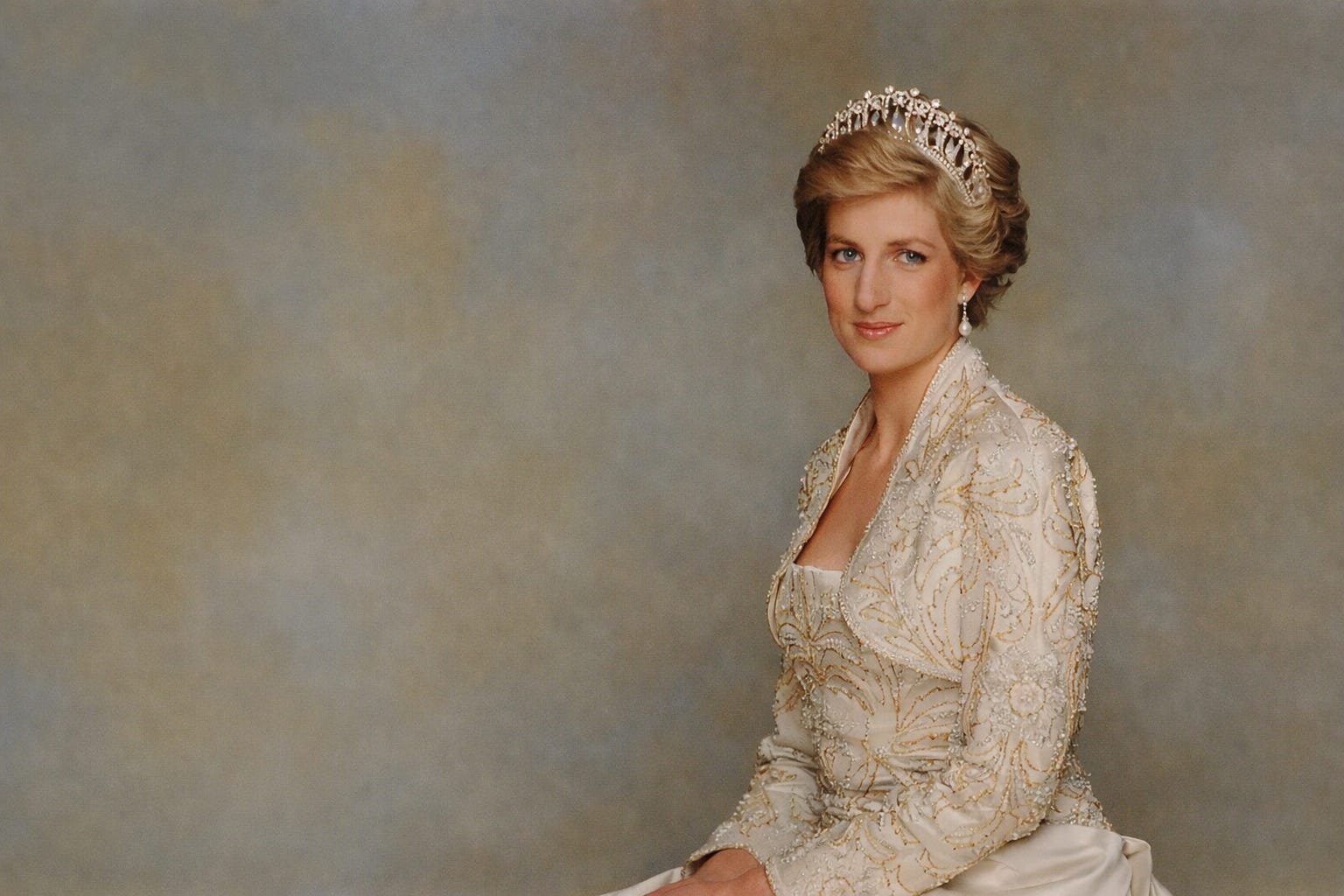
I’ve seen a fair amount of discussion about what title Diana, Princess of Wales would have used had she been alive today — now that King Charles III is on the throne, and looking ahead to the eventual reign of Prince William. Suggestions range from “Queen Mother” to the more imaginative “King’s Mother,” with plenty of uncertainty about how divorce, remarriage, or longevity might have altered her style.
It’s an understandable curiosity. Diana remains one of the most significant figures in modern royal history. But answering the question properly requires precision — because British royal titles are governed not by sentiment or logic, but by convention, precedent, and formal usage.
To make sense of it all, we need to be clear about three things:
What Diana’s actual titles were during her life
How titles for queens really work — and how they differ from descriptive terms like “queen consort” or “dowager queen”
Why certain phrases that sound plausible simply do not exist in British royal usage
Titles vs Roles: A Crucial Distinction
Before going any further, it’s essential to clear up a common source of confusion.
In the British monarchy:
Titles and styles are the formal modes of address actually used in law, court documents, and official communications.
Roles or descriptions explain what someone is, but are not used as titles.
This distinction matters enormously in discussions like this.
For example:
Queen consort is not a title. It is a description of the role played by the wife of a reigning King.
Her title is Her Majesty The Queen.
Dowager queen is not a title. It describes a widow of a King.
Her title is typically Her Majesty Queen [Forename].
These descriptive terms never replace the formal style of address.
With that firmly established, we can now look at Diana’s position with clarity.
Diana’s Title During Her Marriage
When Lady Diana Spencer married Charles, Prince of Wales in July 1981, she became:
Her Royal Highness The Princess of Wales
This was her principal and most visible title, acquired through marriage to the heir apparent. She also held several subsidiary titles — Duchess of Cornwall in England, Duchess of Rothesay in Scotland — but “Princess of Wales” was the dominant style.
Had this marriage endured until Charles’s accession, Diana would have become:
Her Majesty The Queen
This is the only correct title for the wife of a reigning King. She would have been described as queen consort, but she would never have been styled “Queen Consort Diana.” That formulation simply does not exist in British practice.
After the Divorce: “Diana, Princess of Wales”
When Diana and Charles divorced in 1996, her style changed significantly.
She ceased to be “Her Royal Highness” and was thereafter formally styled:
Diana, Princess of Wales
This format is important. It signals that she had once held the title by marriage, but was no longer part of the royal family in an official capacity. She did not revert to “Lady Diana Spencer,” nor did she become “Princess Diana” in a formal sense.
From 1996 until her death in 1997, Diana, Princess of Wales was her correct and complete title.
Had she lived, this would have remained her style unless altered by remarriage or by a specific grant from the monarch.
What If Diana Had Remained Married to Charles?
Now let us consider the most straightforward alternate scenario: Diana remains married to Charles and lives to see his accession.
In that case:
Upon Charles becoming King, Diana would have become
Her Majesty The QueenShe would have been described as queen consort, but her title would simply have been The Queen.
If Charles later died during Diana’s lifetime and William succeeded him, Diana’s position would change again.
She would then have become what is descriptively known as a dowager queen — the widow of a King.
Her title, however, would not have been “Dowager Queen.” Instead, her style would most likely have become:
Her Majesty Queen Diana
This format — “Queen + forename” — is used specifically to distinguish a former Queen from the current Queen, if one exists.
Where “Queen Mother” Fits In
This brings us to the much-discussed title Queen Mother.
Unlike “queen consort” or “dowager queen,” Queen Mother was used as part of the official style of Elizabeth Bowes-Lyon, the widow of King George VI and mother of Queen Elizabeth II. She was formally styled:
Her Majesty Queen Elizabeth The Queen Mother
This style appeared in official royal usage and was not merely a journalistic convenience.
However, it’s important to understand why it was used.
Elizabeth Bowes-Lyon was:
A former Queen (as wife of George VI), and
The mother of the reigning monarch, and
Shared the same name as the reigning Queen.
The addition of “The Queen Mother” served to distinguish between two living Queen Elizabeths.
So, could Diana have been styled “Queen Mother”?
Possibly — but only under very specific circumstances.
If:
Diana had remained married to Charles,
Had become Her Majesty The Queen,
Had outlived him and become Queen Diana, and
There had been a practical need to distinguish her from another Queen Diana (for example, if William’s wife were also named Diana),
Then “Queen Mother” might have been adopted as an official distinguishing style.
Absent that need, she would simply have been Queen Diana.
Why “King’s Mother” Is Not — and Never Has Been — a Title
The phrase “King’s Mother” crops up frequently in online discussions, often by analogy with “Queen Mother.” But it has no basis in British royal titulature.
There are several reasons for this:
Royal titles are not created by familial logic. Being the parent of a monarch does not, by itself, confer a title.
The term “Queen Mother” exists because the woman was previously Queen. The word “Queen” refers to her own former rank — not her child’s.
There is no precedent for “King’s Mother” in British history.
And most decisively: Diana was never Queen.
Nor, obviously, was she ever a King. Without having held the title of Queen, there is no foundation for a derivative title of this kind.
At most, Diana could have been described informally as “the King’s mother.” But that would never have translated into a style of address.
What If Diana Had Remarried?
Had Diana remarried after her divorce from Charles, her title would almost certainly have changed again.
Under long-established convention:
If she had married a commoner, she would likely have taken his surname and ceased to use “Princess of Wales” as a formal style.
If she had married a titled man, she would normally have taken the feminine form of his title.
In either case, her connection to royal titulature would have been secondary to her new marriage. Continued public use of “Princess Diana” would have been colloquial rather than correct.
If Diana Had Lived to See William Become King
Finally, let us consider the scenario most often implied by the question itself.
If Diana had:
Remained divorced,
Not remarried,
And lived to see William ascend the throne,
Then her title would not have changed at all.
She would have remained:
Diana, Princess of Wales
She would certainly have been the King’s mother in a personal sense — but that relationship carries no automatic title in British usage.
No promotion, no new style, no special designation.
In Summary
Putting it all together:
“Queen consort” and “dowager queen” are descriptions, not titles.
The title of a queen consort is Her Majesty The Queen.
The title of a widowed queen is typically Her Majesty Queen [Forename].
“Queen Mother” was an official distinguishing style used for Queen Elizabeth, but only because she had been Queen and shared a name with the reigning monarch.
Diana was never Queen, and therefore could not have been “Queen Mother” unless she had remained married to Charles and outlived him.
“King’s Mother” is not a recognised title and has never existed in British royal tradition.
Had Diana lived to see William’s reign while remaining divorced, she would simply have remained Diana, Princess of Wales.
Titles in the British monarchy are not flexible labels; they are carefully bounded expressions of rank, history and constitutional order. Diana’s enduring significance does not depend on what she might have been called — but understanding these distinctions helps us see how the monarchy preserves continuity even as generations change.
Brilliant, thank you.
Would ‘Princess Diana’ have retained the courtesy title of “Lady” due to her as the daughter of an earl if she remarried to a commoner? I.e. would she have been “Lady Diana Fayed” or simply Mrs. Fayed?